UNIUYO VC BRIEFS PRESS AHEAD OF CONVOCATION
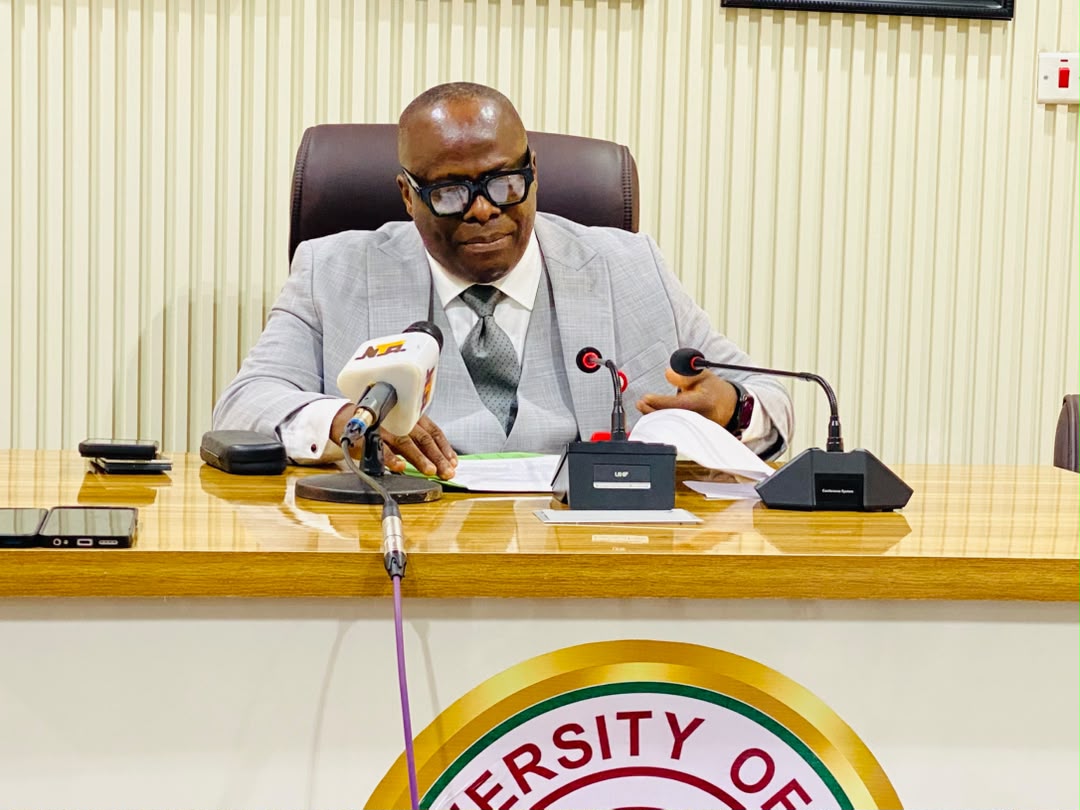
UNIUYO VC BRIEFS PRESS AHEAD OF CONVOCATION, HIGHLIGHTS REFORMS
…Announces 22,961 Total Graduands, 214 First Class For Two Sessions
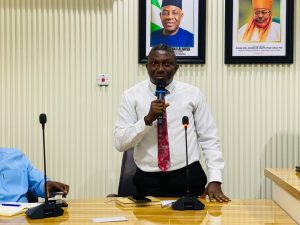
The Vice-Chancellor of the University of Uyo, Prof. Christopher N. Ekong, has announced that a total of 22,961 graduands will receive various academic qualifications at the University’s 31st and 32nd Combined Convocation Ceremony, while highlighting ongoing reforms and development initiatives aimed at repositioning the institution for greater academic excellence and institutional sustainability.
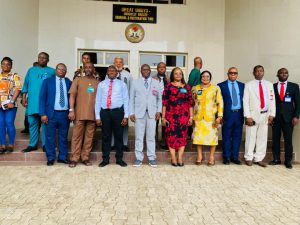
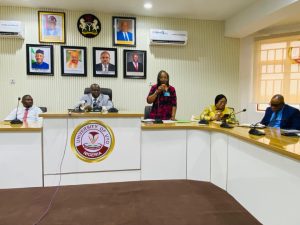
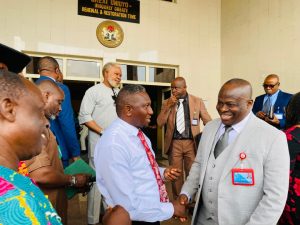
Prof. Ekong disclosed this during a press briefing ahead of the 31st & 32nd Combined Convocation Ceremony, where he outlined the University’s achievements, ongoing projects, strategic partnerships and plans for the future. The briefing attracted coverage from over 20 media organisations and was attended by the Deputy Vice-Chancellor (Administration), the Registrar, Bursar, University Librarian and Directors of the University
Welcoming members of the media on behalf of the University Management, the Vice-Chancellor expressed delight at the opportunity to brief the public on the forthcoming ceremony, describing it as another significant milestone in the University’s history.
Reflecting on his emergence and formal inauguration as the ninth Vice-Chancellor on June 16, 2026, Prof. Ekong said he assumed office with a strong sense of responsibility and determination to justify the confidence reposed in him. He acknowledged the contributions of those who supported his aspiration and assured that his administration would remain inclusive and committed to the collective advancement of the institution.
He explained that his administration was anchored on six strategic pillars, which provide the framework for its policies and programmes, with emphasis on staff welfare, student-centred governance, infrastructural development, academic excellence, research advancement and institutional sustainability.
Highlighting the interventions undertaken by his administration, Prof. Ekong disclosed that significant attention had been given to addressing longstanding institutional challenges, particularly in transcript processing, timely release of examination results, decentralisation of admissions and the general green and clean academic environment.
He announced that 1,810 academic transcripts had been processed and released, adding that his administration had introduced a 72-hour turnaround target for transcript processing to eliminate unnecessary delays and restore confidence in the University’s administrative services.
He further disclosed that admissions had been decentralised to the Faculties, with Deans, Directors and Heads of Departments who had earlier received the necessary training. He added that Quality Assurance teams had been mandated to establish monitoring mechanisms to ensure compliance with established admission procedures.
On academic development, the Vice-Chancellor announced that more than 15 TETFund projects were slated for implementation, while previously stalled projects had been reactivated. He also disclosed the provision of 500 computers to strengthen digital learning and the commencement of the second phase of development at the UNIPoD Centre.
Other interventions include the resolution of outstanding issues affecting the Medical Laboratory and Physiotherapy facilities, renovation of the Medical Campus Auditorium, procurement of dental chairs and the ongoing development of the Faculty of Pharmacy. The Vice-Chancellor also highlighted efforts to improve research development and digitalisation, describing them as essential components of the University’s long-term transformation agenda.
Prof. Ekong emphasised that no University could attain meaningful academic and institutional growth without adequate infrastructure, explaining that his administration had therefore adopted a holistic approach to infrastructural renewal.
He listed the renovation of offices, repairs to the Central Administration water fountain, renovation of the NDDC Female Hostel and improvements to the Presidential Hostel among the interventions undertaken. He also announced the provision of two boreholes at the Town Campus to improve water supply.
On environmental management, the Vice-Chancellor said, his administration had introduced a Green and Clean Campus Initiative aimed at restoring the University’s environmental outlook. He disclosed that tree-planting activities had commenced, while modern farming and environmental equipment had been procured. He added, that the University had engaged forest guards, equipped them for effective operations and acquired drones to strengthen environmental surveillance and security. Steps had also been taken to address leakages and other environmental concerns.
The Vice-Chancellor further announced that two markets had been constructed, while traders operating around the University’s main gate had been relocated to a more suitable environment to improve orderliness and the general outlook of the campus. In a move towards economic sustainability, Prof. Ekong disclosed that his administration was working to reduce the University’s dependence on statutory allocations by developing viable commercial ventures and strengthening internally generated revenue.
He announced the establishment of the University Commercial Block Company and a paint industry, alongside the development of University Farms Limited as part of the University’s commercialisation strategy. On agricultural development, he disclosed that six hectares of land had been cultivated for cucumber production, while 6,100 cocoa seedlings, 3,000 plantain seedlings and 4,000 oil palm seedlings had been planted.
He also announced the reactivation of mushroom production and the provision of boreholes at the Faculty of Agriculture to support irrigation and other farming activities. According to him, these initiatives are designed to create additional revenue streams, promote agricultural development, generate employment opportunities and strengthen the University’s capacity for self-sustenance.
On staff welfare, Prof. Ekong, reaffirmed his administration’s commitment to fairness, merit and professional development, stressing that the University’s academic and administrative workforce remained central to its growth. He disclosed that staff salaries and entitlements had been paid, while outstanding professional allowances were being settled in batches. He also announced the payment of CONTTA and CATA from January 2026 to date, as well as the implementation of the Lower Task Law.
The Vice-Chancellor further stated clearly that a Bursary Operational Manual had been developed to strengthen financial administration and institutional accountability. He, however, noted that the payment of Our of Pocket Expenditures (OPE) had been stopped by his administration.
He assured members of staff that his administration would continue to create opportunities for professional advancement, leadership development and career progression, particularly for academic staff aspiring to higher professional ranks. On student affairs, the Vice-Chancellor expressed satisfaction with the seamless transfer of leadership within the Students’ Union Government and the smooth implementation of the Nigerian Education Loan Fund (NELFUND) scheme.
He said the University had taken steps to sensitise students on how to access the loan facility. He also highlighted interventions aimed at addressing security challenges, including cult-related activities and sexual harassment, as well as resolving strained relationships with host communities. Prof. Ekong identified strategic partnerships and institutional collaborations as important drivers of his administration’s development agenda. He disclosed that he had hosted the Ambassador of the Republic of Korea to Nigeria, Amb. Jeon Yeon, as part of efforts to strengthen international relations and explore opportunities for academic and institutional collaboration.
He also announced engagements with the Managing Director of the South-South Development Commission, saying that it was a converge of all Vice-Chancellors of Universities in the South-South region, aimed at promoting regional cooperation and mutual institutional benefits. The Chief Executive officer added that he had hosted staff unions as part of efforts to strengthen industrial harmony and relationships. He highlighted ongoing collaboration with the Canadian Government through a Memorandum of Understanding on collaborative certification, noting that the Directorate of International Programmes had been repositioned to improve the University’s international visibility and partnerships.
Speaking on the well-designed 31st and 32nd Combined Convocation Ceremony, Prof. Ekong described the occasion as particularly significant, being the first convocation ceremony to be organised under his administration. He explained that the ceremony would confer degrees and other academic qualifications on graduates of the 2023/2024 and 2024/2025 academic sessions. He disclosed that this would be the last time the University would combine two academic sessions for convocation, as subsequent ceremonies would be conducted on a single-session basis.
The Vice-Chancellor expressed pride in the University’s founding vision and the contributions of successive administrations, describing the institution as one that had experienced considerable challenges, including low staff morale and infrastructural deficiencies. He recalled that, upon assuming office, he convened a stakeholders’ town hall meeting to obtain firsthand information about the University’s challenges and identify areas requiring urgent intervention. He said the exercise informed the administration’s decision to institute a systematic approach to institutional renewal, including improved facilities, stakeholder engagement, alumni relations and performance monitoring.
While acknowledging the progress recorded, Prof. Ekong maintained that the achievements represented only the beginning of a broader transformation agenda. He reaffirmed his commitment to building on the foundations laid by previous administrations and positioning the University for greater national and international recognition.
Giving a breakdown of the graduating students, the Vice-Chancellor disclosed that the University would graduate students across undergraduate, diploma, certificate and postgraduate categories.
For the 2023/2024 academic session, a total of 9,106 students are expected to graduate. The breakdown shows that 116 graduands obtained First Class Honours, 3,452 Second Class Honours (Upper Division), 4,846 Second Class Honours (Lower Division), 476 Third Class and 216 Pass degrees. For the 2024/2025 academic session, the breakdown indicates 98 First Class graduates, 3,764 Second Class Honours (Upper Division), 5,622 Second Class Honours (Lower Division), 441 Third Class and 186 Pass degrees.
The Vice-Chancellor also disclosed that the convocation would feature 19,217 Bachelor’s degree recipients, 814 diploma graduands, 248 certificate graduands and 2,682 postgraduate graduands, with a stated overall total of 22,961 graduands. The ceremony will also feature the conferment of Honorary Doctorate Degrees on distinguished Nigerians in recognition of their contributions to society and various fields of human endeavour.
Among the proposed recipients are His Excellency, Dr. Agbu Kefas, Governor of Taraba State; High Chief Government Oweizide Ekpemupolo, popularly known as Tompolo; Chief Dr. Samuel Ogbuku, the Managing Director, Niger Delta Development Commission (NDDC), as well as the Chairman of Ubotex, Mr. Samuel Ubong Obot.
The Vice-Chancellor expressed appreciation to members of the University Community, stakeholders, alumni and the media for their support, assuring that his administration would remain focused on delivering sustainable institutional development. He urged the media to continue partnering with the University in projecting its academic achievements, development initiatives and contributions to national development.